To most people Mexico evokes images of pristine beaches, towering volcanoes and diverse landscapes interspersed with imposing Mesoamerican archeological sites. Few envision a country bathed in a beguiling blend of sacred and secular structures dating from the three centuries when Mexico was governed by Spain (1521-1821).
Sadly, much of what was built has been lost, the result of countless natural disasters, 19th and early 20th century wars, as well as waves of religious and artistic reformations during which the merciless hand of man ruined what had been raised. Nonetheless, the sheer quantity and quality of what remains attests to the staggering artistic and architectural output of these 300 years.
Hopefully, my photographs and descriptive essays serve as a satisfactory introduction to this largely overlooked body of human creativity. If nothing else, I trust they may whet the palate of those with an appetite for architecture, history and travel, often off the beaten track. Certainly it represents my personal, undying interest in the subject as an endless source of discovery and joy.
"Mexico is a country as richly set with architecture as an Elizabethan gown with pearls".
-- Elizabeth Wilder Weismann
Sadly, much of what was built has been lost, the result of countless natural disasters, 19th and early 20th century wars, as well as waves of religious and artistic reformations during which the merciless hand of man ruined what had been raised. Nonetheless, the sheer quantity and quality of what remains attests to the staggering artistic and architectural output of these 300 years.
Hopefully, my photographs and descriptive essays serve as a satisfactory introduction to this largely overlooked body of human creativity. If nothing else, I trust they may whet the palate of those with an appetite for architecture, history and travel, often off the beaten track. Certainly it represents my personal, undying interest in the subject as an endless source of discovery and joy.
"Mexico is a country as richly set with architecture as an Elizabethan gown with pearls".
-- Elizabeth Wilder Weismann
Colonial Mexico's gallery contains 10829 photos.
Gallery
 The Sixteenth Century: Monastic Architecture in the New World
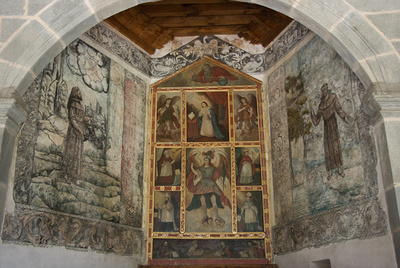
The spiritual conquest of Mexico’s indigenous people was carried out by cadres of exceptionally zealous friars selected for the unprecedented task at hand. The massive conventos (monasteries) which miraculously materialized throughout Central Mexico were conceived by these religious while constructed by a vast native workforce. This harnessing of the inherent artistry in the polytheistic prehispanics peoples and its reapplication to Christian models is an astonishing story within the annals of world history. |
 The Seventeenth Century: Great Cathedrals and the Rise of a Popular Baroque
In 17th century Mexico, Seculars began to replace Regulars as temporal authority was prioritized and attention shifted from establishing rural conventos for converting the indigenous to constructing urban cathedrals that catered to a burgeoning Spanish congregation. Professional Spanish architects were imported, and the first seven diocesan cathedrals founded in the present-day state capitol cities of Mexico, Puebla, Guadalajara, Morelia, Oaxaca, San Cristóbal de las Casas, and Mérida. |
 The Eighteenth Century: Repeat or Die, An Artistic Culmination
The sheer volume of artistic production in eighteenth century Mexico is difficult to conceive. The country had become a veritable workshop, its capital city a wonder to behold. Ecclesiastical and civic architecture culminated in quantity and quality as great sources of newfound wealth sponsored the construction of staggeringly ornate churches, splendid urban residences, elegant rural haciendas, the completion of cathedrals in Central Mexico and the construction of soaring new ones to the North. |
 Neoclassicism: Spain's Last Bid
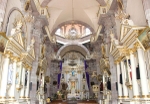
In the final decades prior to its independence (1821), Mexico experienced a Spanish imposed Neoclassicism, part of the Bourbon Crown’s agenda for greater, centralized control over its colonies. For Mexico, Neoclassicism represented a violent reaction against the exuberance of Mexican Baroque and its inexhaustible array of Catholic imagery. Fostering European art of the “Buen Gusto”, the movement’s focal point was the Academia de San Carlos, established in Mexico City in 1783 to champion an artistic cleansing inspired by the French Enlightenment and at the auspices of Bourbon reform. |
 Mexican Sacred Iconography: Saints, Mary, Christ, & Religious Themes
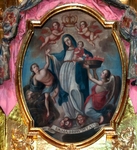
The Council of Trent (1545-1563) upheld Catholic dogma, championed its iconography, and fostered the proliferation of sanctified imagery as part of its counter reformatiosist initiative. Because such images are so common about Mexico this gallery is offered as a means to better identify many of them. |