Pomacuarán, Michoacán, San Miguel Arángel, ceiling painting
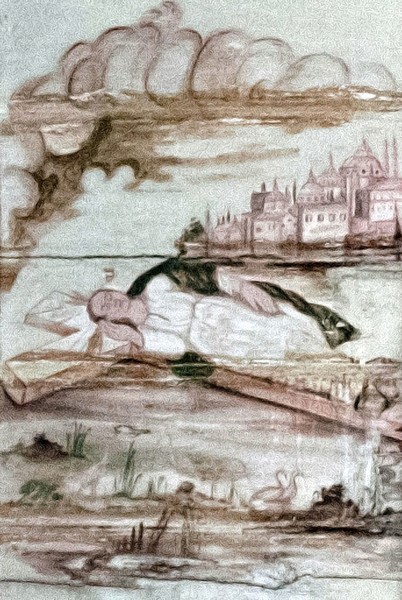
The ceilings of many 16th and 17th century churches in Michoacán were painted in the late 18th - early 19th century with sacred images meant to foster participation on the part of the congregation in liturgical services. (see Colonialmexico.blogspot.com)
Certainly Saint Helena is an uncommon subject for such liturgies, but she is painted on the ceiling of the church of San Miguel Arcángel at Pomacuarán, laying asleep upon the True Cross. Emanating from her head are the three holy rays which in Mexico are commonly associated with Christ, an indication of Helena's unity with Jesus at the very stop of his Crucifixion on Mt. Golgotha. In the background lies the city of Jerusalem. Below is an ambiguous scene: likely the unearthing of the Cross by Judas Cyriacus of Jerusalem, who purported had secret knowledge of the original site; if not, of the dead man resurrected (one version of the story) when placed before the True Cross.
Pomacuarán, Michoacán, San Miguel Arcángel

painted ceiling
Certainly Saint Helena is an uncommon subject for such liturgies, but she is painted on the ceiling of the church of San Miguel Arcángel at Pomacuarán, laying asleep upon the True Cross. Emanating from her head are the three holy rays which in Mexico are commonly associated with Christ, an indication of Helena's unity with Jesus at the very stop of his Crucifixion on Mt. Golgotha. In the background lies the city of Jerusalem. Below is an ambiguous scene: likely the unearthing of the Cross by Judas Cyriacus of Jerusalem, who purported had secret knowledge of the original site; if not, of the dead man resurrected (one version of the story) when placed before the True Cross.
Pomacuarán, Michoacán, San Miguel Arcángel
painted ceiling
|
Also in: St. Helena & the True Cross
 |  |  |  |